Wireless retrofit
Designed for an occupied HDB flat.
- No wall rewiring or structural changes
- Devices can be repositioned or removed
- Assessment confirms device placement and setup time
Radiant Robotics · Smart home, made for HDB living
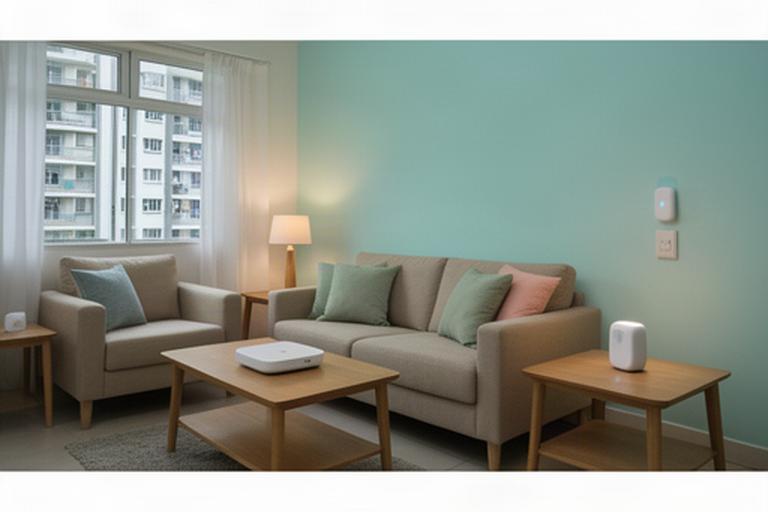
Choose compact smart home devices that fit the rooms you already have. Our wireless HDB installation approach adds useful controls without hacking walls or changing built-in cabinetry.
Planned around your flat, your routines and the people who live there.
Select a flat type for a starting point.
Begin with living-room lighting and air-conditioning control, then add simple bedroom night lighting. Wireless devices keep the setup suited to an occupied home.
Room by room
A useful setup follows the way your household moves through the flat. Start with the rooms that need attention most.
Make common routines easier to manage.
Keep controls simple after lights-out.
Get useful alerts without adding clutter.
Use compact sensors in areas where they help.
Wireless retrofit
Wireless devices communicate without new cables running through walls. We choose mounting methods for the surface and the device, including adhesive pads, clips or discreet brackets.
Designed for an occupied HDB flat.
More suitable when electrical work is already planned.
Consider this route when electrical work is already part of your plans.
For many occupied flats, wireless devices avoid unnecessary building work.
A typical three-room or four-room installation is scoped after we check the rooms, connectivity and device count. We’ll explain the expected schedule before any work begins.
Designed for every generation
Keep familiar ways to switch things on. A phone can be useful, but it should not be the only way to control a room.
Keep physical switches or add wall controls so lights and fans still feel straightforward to use.
Use large labels and strong contrast for common actions such as “Night light” or “Cool room”.
Voice control can help when reaching a switch is difficult. It remains an alternative, not a requirement.
We can separate everyday controls from settings that should stay fixed, then agree who can change those settings. Button size, tactile feel and label contrast are checked during setup.
Comfort through the day
Room temperature · settings are tailored to your household
Temperature and occupancy readings can guide air-conditioning settings. Fan and ventilation routines can help avoid cooling an empty room for hours. We set energy-conscious defaults and adjust them to the people using the space.
A setup that can grow
Choose a practical first step, then add devices if household routines or care needs change. Each phase is checked against your flat and existing equipment.
Begin with lighting control or air-conditioning in the room your household uses most.
Extend the setup when more rooms or routines need attention.
Build on compatible equipment rather than replacing it without reason.
Plan around your real home
We’ll review the flat type, power points, connectivity, occupants and priorities. Your proposal will say what we recommend and what we don’t.