Radar presence sensing
Small sensors detect presence and movement in agreed areas, including changes in how often someone moves between rooms.
What it cannot do
Radar sensing does not identify a person's face or produce a camera image.
Support your parent to age in place with useful signals about everyday routines, without placing cameras in private rooms.
Your father may accept a sensor on the ceiling. He may refuse a camera in his bedroom. That difference shapes every home assessment we make.
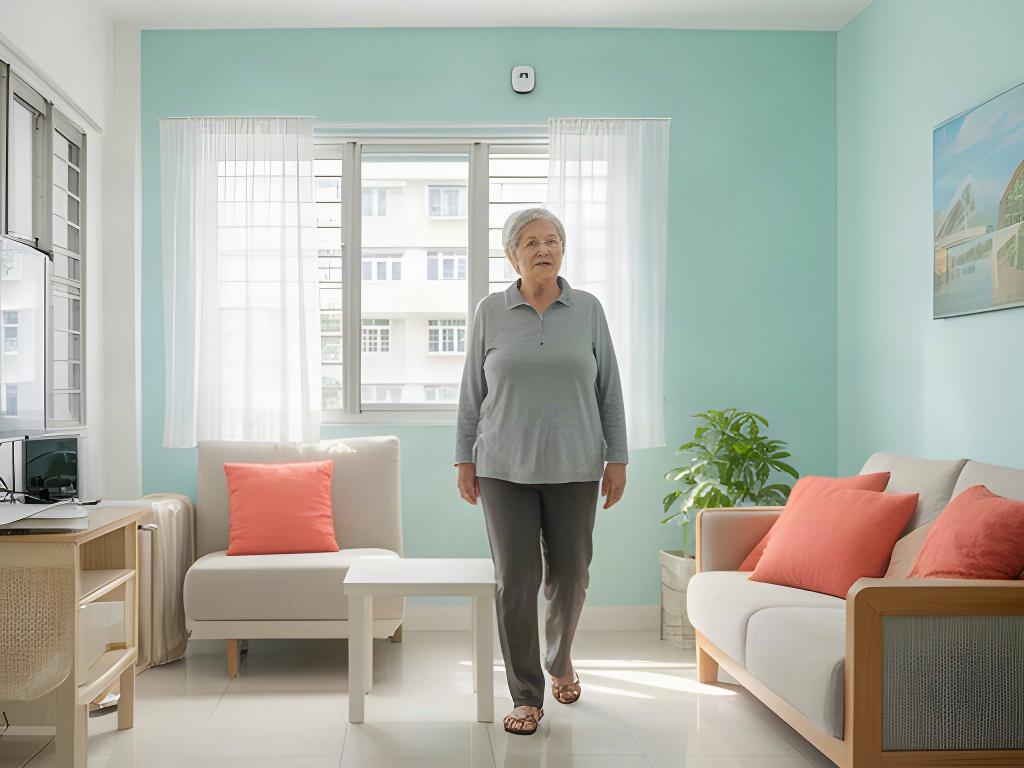
Each device has a defined job. The system looks for useful changes in a home, without recording video of the person who lives there.
Small sensors detect presence and movement in agreed areas, including changes in how often someone moves between rooms.
Radar sensing does not identify a person's face or produce a camera image.
Door, bed, chair and appliance contacts can help show whether familiar routines are happening at expected times.
A contact sensor reports an opening or change of state. It cannot tell who caused it.
Temperature, humidity and air-quality readings can flag conditions that may need a family member to check in.
Environmental readings do not diagnose illness or replace a clinical assessment.
Where the selected setup allows, signals are processed in the home to limit the information sent outside it.
Local processing does not remove the need to agree on data access and notification settings.
Patterns are compared with the person's own routine. An alert can prompt a call or visit; it cannot explain the cause by itself.
A longer-than-usual period without movement can trigger a check-in based on an agreed time window.
Slower movement between rooms or longer pauses can show a gradual shift worth discussing with the family.
Consistent changes in meal preparation, sleep timing or bathroom visits can be reviewed over a longer period, such as two weeks.
A high room temperature or a stove-left-on pattern can prompt a practical check before it becomes a bigger concern.
Set the order, channel and quiet hours with the senior and the people supporting them.
App alert or SMS for the person you nominate.
Receives an alert if the first person does not respond.
Can be included in the escalation plan where appropriate.
Family first: the primary caregiver is contacted before the secondary family member and any arranged care provider.
Choose app notifications, SMS or phone calls for each person. Quiet hours can limit non-urgent alerts overnight; weekly summaries are available for families who prefer fewer interruptions.
Wireless devices can be placed around the routine, without renovation or rewiring. The assessment identifies useful locations and spaces where sensing should be left out.
For a shared flat, the plan can take other household members' privacy and daily movement into account.
Private rooms stay private. Bathrooms are deliberately excluded.
Start with shared living space and the route between the sleeping area and kitchen. Only add contacts that answer a clear routine question.
The senior should know what is installed, what it detects and who receives an alert before the system is set up.
We explain each device in plain language and agree on access with the person living in the home.
Settings focus on the information needed for agreed routine and environment alerts, rather than a stream of activity for its own sake.
Wider family members can receive summaries while access to detailed activity remains limited to approved people.
We review the flat, everyday routines, existing devices and the caregiver contact order. Bring your parent into the conversation from the start.
Share the flat type and who should be part of the assessment. We'll discuss suitable next steps.
Book a senior home assessment